|
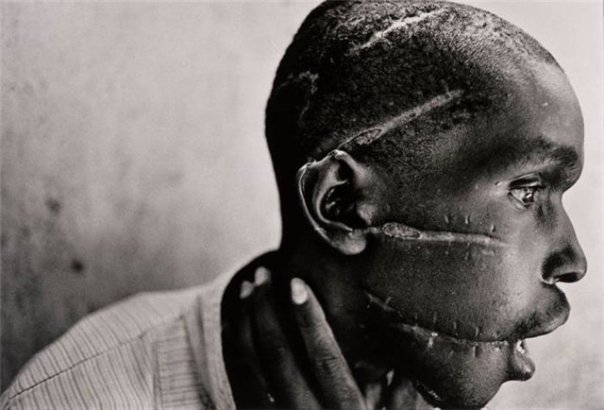
| A scene from the film District 9. |
Over the course of the semester thus far, we have learned about several various forms of cultural and social genocide that has occurred over the course of history. District 9 (a film meant to mimic a time or apartheid), for me personally, has been one of the most unique, yet also best illustrated way in which the "wrongness" behind cultural genocide, killing, and mass extermination is wrong and destructive. In the film, we meet the main character Wikus tests alien technology that he stumbles upon in one of the alien's homes and, as a result, takes on alien DNA, which eventually yet gradually takes over his body over several hours. He becomes what they call a "prawn." MNU then conducts various tests on him, that, as a result, force Wikus to recognize the severity of the situation. One scene is very striking as he is being tested-- they discover that his new hand can operate alien weapons/guns, and they use an alleged random "prawn" to be the test of his aim. He is branded and marked with a big red 'X' and the way in which the scene is shot, one can see that he is afraid for his life and does not know what to expect. Wikus begs not to have to kill him, but they force him to follow through. This scene is very predictive of the future violence that the MNU carries out against District 9 throughout the remainder of the film. There is an interesting subplot going on in which Smit lies to the press and the public and says that Wikus has been infected by an alien STD, as he was having intercourse with the prawns. Not only does Wikus' wife not feel comfortable to be with her husband who is now in permanent exile because of his alien deformities, but she does not know how to believe (her husband or her father) about the truth of what has happened to Wikus. There is an emotional phone calls that takes place between Wikus and his wife in which he begs her to "please not give up" on him.
Arguably, this subplot that occurs in the novel is highly symbolic of the types of genocide that we have learned about in two other films-- The Pianist and Hotel Rwanda. For Wikus, the command module becomes a source of power for him- a way in which to fight back against the oppressors. Christopher's son ultimately activates the mother-ship and an activated, alien battle suit which is used to kill Obesandjo and his man before they are able to kill Wikus and is even able to save Christopher while killing men from the MNU as well. How does this scene relate to the other films? Wikus comes to represent the ultimate fight and successful win against oppression, genocide, killing, prejudice, and more. There are a series of interviews that close the film, and they all question what the future will be like for Wikus and whether or not Christopher will return. Will he want to retaliate or reconcile is the big question that the movie seems to raise. MNU is destroyed and exposed for their illegal experiments and tests, and District 10 is build up upon the destruction of District 9. Wikus and his wife also seem to be connected still (in the flower scene) despite his transformation. District 9 and 10 represent concentration camps or places in the world like Rwanda that experience turmoil and oppression. MNU is arguably representative of perhaps the United Nations in their refusal to assist Rwanda at first when they needed help the most, or they could even be argued to represent the German soldiers who killed innocent, Jewish victims based on their degrading and inhumane views of the Jewish people. To both the MNU and Nazi Germany, for example, the people that they committed mass genocide towards were people that they felt had no place for existence on this earth. District 9 is much different, however, in that is shows its audience a positive triumph over this unacceptable behavior. For The Pianist, his talent is oppressed, and he is unable to perform and play his music for over 2 years, and this form of artistic oppression is comparable to Wikus in the fact that his job, a job that he clearly loved as evidenced by the opening scenes of the film and the excitement and passion that he put into his work, is taken away from him when he is betrayed by his own company and the employees that he trained. All 3 films show the totality of loss and the possible triumph over evil.
As one of the blackboard articles states from this week, "Corporations state that they must go abroad to compete to survive. A recent economic analysis authorized by Congress reveals that American labor has interests similar to those of South African labor. It is impossible to separate the impact on the domestic economy of United States investment in only 1 country, but the report does summarize the effect of total foreign US investment on the American economy... The corporations are gaining profit at the expense of both South African and American labor (Thompson 55)." I found this to be a very interesting bit of information in terms of how dependency of one nation can be reliant or, or even benefit from, the countries in which they are oppressing. If competition and a country's survival is dependent on these countries, it is amazing that one would chose to hone in on these "prejudices" and sentiments of hatred towards the people of these countries. Raising the question of profit is also an interesting concept because in all of the films that we have seen this semester, "profit" is always in the hands of the oppressor. It is also interesting because it is arguable that profit can often be the driving force behind these oppressors to take control and dominate, despite the fact that they oppress against those that could be necessary for their competitive, international, success. On a different note, one article for Week 7 regarding Rwandan genocide states, "Visual representations, photojournalistic and otherwise, are important components of many genocide discourses. It may be argued that, in the era of the witness, visual representations and especially photojournalism have contributed a great deal to the delocalization and internationalization of the memory of war and genocide. Photojournalism, however, covers and bears witness to different atrocities to different degrees (Moller 115)." While elements of photojournalism do not apply to The Pianist or fully to District 9, the element of journalism as a whole is important because of the idea it capitulates of capturing these types of genocides and the role it plays in history. In District 9 and Hotel Rwanda, both films make it point to let the audience know that capturing these moments of genocide are important to gain a message from the events-- the destruction of genocide. Whether the element of journalism is destroyed and lost from an employee or whether media is used to exploit genocide or use it as a means of media attention and attraction, the reaction by the receiver seems to be most critical. There needs to be a reaction to the "wrong" that is occurring, and something should be done to put a stop to genocide.
Arguably, this subplot that occurs in the novel is highly symbolic of the types of genocide that we have learned about in two other films-- The Pianist and Hotel Rwanda. For Wikus, the command module becomes a source of power for him- a way in which to fight back against the oppressors. Christopher's son ultimately activates the mother-ship and an activated, alien battle suit which is used to kill Obesandjo and his man before they are able to kill Wikus and is even able to save Christopher while killing men from the MNU as well. How does this scene relate to the other films? Wikus comes to represent the ultimate fight and successful win against oppression, genocide, killing, prejudice, and more. There are a series of interviews that close the film, and they all question what the future will be like for Wikus and whether or not Christopher will return. Will he want to retaliate or reconcile is the big question that the movie seems to raise. MNU is destroyed and exposed for their illegal experiments and tests, and District 10 is build up upon the destruction of District 9. Wikus and his wife also seem to be connected still (in the flower scene) despite his transformation. District 9 and 10 represent concentration camps or places in the world like Rwanda that experience turmoil and oppression. MNU is arguably representative of perhaps the United Nations in their refusal to assist Rwanda at first when they needed help the most, or they could even be argued to represent the German soldiers who killed innocent, Jewish victims based on their degrading and inhumane views of the Jewish people. To both the MNU and Nazi Germany, for example, the people that they committed mass genocide towards were people that they felt had no place for existence on this earth. District 9 is much different, however, in that is shows its audience a positive triumph over this unacceptable behavior. For The Pianist, his talent is oppressed, and he is unable to perform and play his music for over 2 years, and this form of artistic oppression is comparable to Wikus in the fact that his job, a job that he clearly loved as evidenced by the opening scenes of the film and the excitement and passion that he put into his work, is taken away from him when he is betrayed by his own company and the employees that he trained. All 3 films show the totality of loss and the possible triumph over evil.
As one of the blackboard articles states from this week, "Corporations state that they must go abroad to compete to survive. A recent economic analysis authorized by Congress reveals that American labor has interests similar to those of South African labor. It is impossible to separate the impact on the domestic economy of United States investment in only 1 country, but the report does summarize the effect of total foreign US investment on the American economy... The corporations are gaining profit at the expense of both South African and American labor (Thompson 55)." I found this to be a very interesting bit of information in terms of how dependency of one nation can be reliant or, or even benefit from, the countries in which they are oppressing. If competition and a country's survival is dependent on these countries, it is amazing that one would chose to hone in on these "prejudices" and sentiments of hatred towards the people of these countries. Raising the question of profit is also an interesting concept because in all of the films that we have seen this semester, "profit" is always in the hands of the oppressor. It is also interesting because it is arguable that profit can often be the driving force behind these oppressors to take control and dominate, despite the fact that they oppress against those that could be necessary for their competitive, international, success. On a different note, one article for Week 7 regarding Rwandan genocide states, "Visual representations, photojournalistic and otherwise, are important components of many genocide discourses. It may be argued that, in the era of the witness, visual representations and especially photojournalism have contributed a great deal to the delocalization and internationalization of the memory of war and genocide. Photojournalism, however, covers and bears witness to different atrocities to different degrees (Moller 115)." While elements of photojournalism do not apply to The Pianist or fully to District 9, the element of journalism as a whole is important because of the idea it capitulates of capturing these types of genocides and the role it plays in history. In District 9 and Hotel Rwanda, both films make it point to let the audience know that capturing these moments of genocide are important to gain a message from the events-- the destruction of genocide. Whether the element of journalism is destroyed and lost from an employee or whether media is used to exploit genocide or use it as a means of media attention and attraction, the reaction by the receiver seems to be most critical. There needs to be a reaction to the "wrong" that is occurring, and something should be done to put a stop to genocide.


 Boubacar Boris Diop